
How do you design a Bitcoin wallet that keeps people safe when the threat isn't a hacker, but another person standing in the same room?
Download on the App Store
Role
Platform
Client
Year
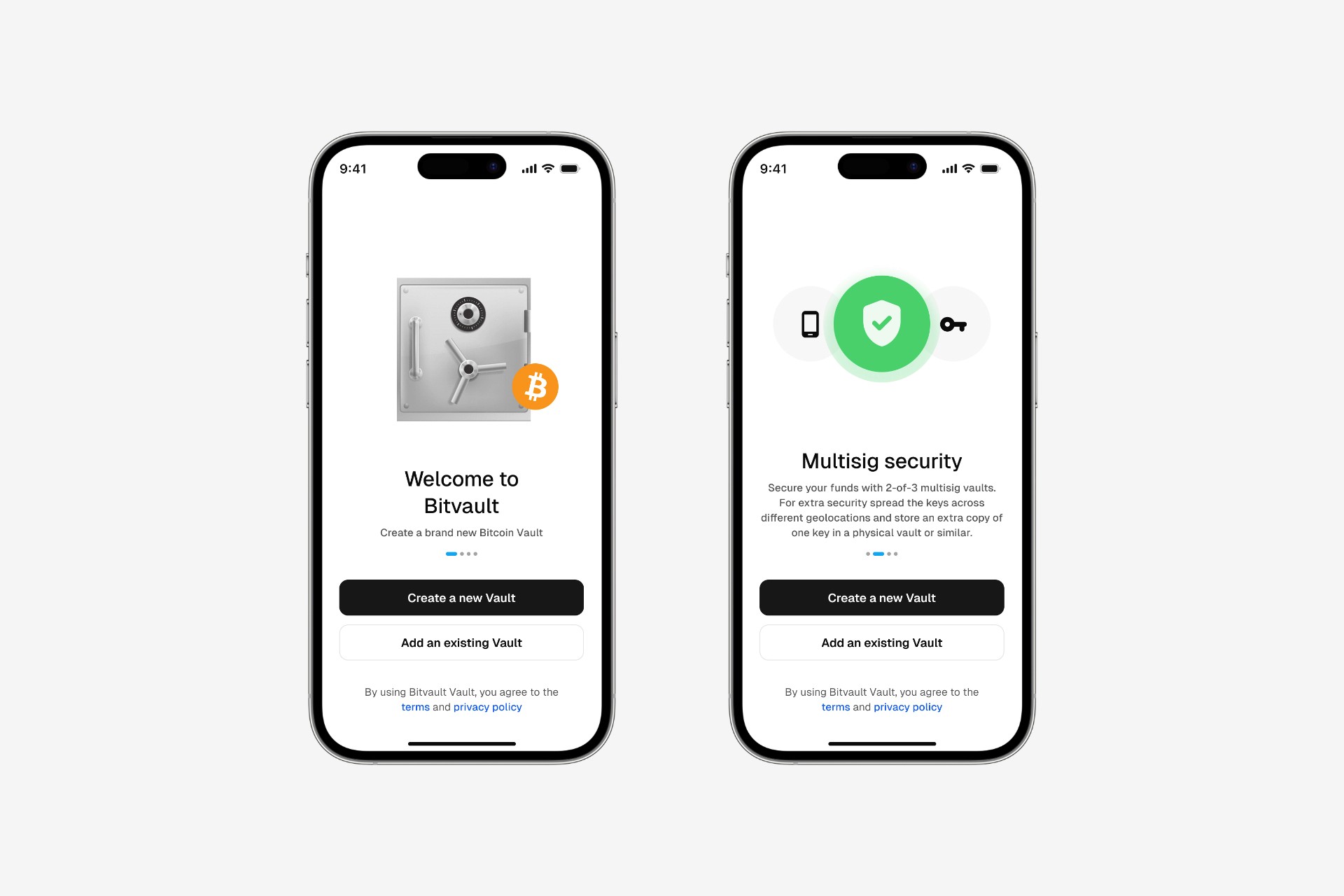
Most Bitcoin wallets are designed around a single assumption: Protect users from remote attackers.
Encryption, secure chips, seed phrases and biometric authentication make stealing funds over the internet incredibly difficult.
Bitvault began with a different assumption.
Around the world, Bitcoin users have increasingly become targets of physical theft, coercion and extortion. A secure wallet offers little protection when someone is forcing its owner to unlock it.
Bitvault was created to solve a different category of problem: plausible deniability.
Rather than protecting users after they've been attacked, Bitvault is designed so that an attacker never knows whether they've actually gained access to everything. This project explores how thoughtful product design can make personal security feel invisible, intuitive and trustworthy.
When cryptography isn't enough
Bitcoin introduced something extraordinary. Individuals could own wealth without trusting banks or governments. But that freedom introduced a new responsibility.
Users now become their own bank. Traditional banking protects customers from many forms of theft through institutions, insurance and recovery mechanisms.
Bitcoin cannot.
If private keys are stolen, or willingly revealed under pressure, the funds are gone. Most wallets focus on protecting keys from malware.
Bitvault instead asks a different question.
That question shaped every design decision throughout the project.

Modern wallets assume authentication equals ownership. Enter the correct PIN, Unlock with Face ID, Approve the transaction. But physical coercion changes everything.
Under duress, users often have no safe option except to comply. The challenge wasn't simply protecting Bitcoin. The challenge was protecting people.
"How do we secure Bitcoin?"
"How do we protect people?"
Every design decision was measured against three principles.
1. Make security invisible
Advanced security features should not require advanced technical knowledge.
Protection should feel natural rather than configurable.
2. Reduce cognitive burden
Users should never need to remember complicated emergency procedures.
The safest action should also be the simplest.
3. Build trust
Users are trusting Bitvault with their life savings.
Every interaction should reinforce clarity, confidence and predictability.

Before designing anything, I wanted to understand where existing wallets were succeeding, and where they weren't.
I reviewed leading Bitcoin wallets, security reports, and public discussions around wallet attacks, while analysing real-world incidents involving physical coercion against cryptocurrency holders.
Three patterns quickly emerged.

Electrum

Trezor

BlueWallet

Zeus

Nunchuk

Aqua
1. Security was heavily technical
Most wallets focused on encryption, private keys, hardware compatibility, and cryptographic safety. Few considered what happens after a user has already been forced to unlock their device.
2. Advanced security often increased complexity
The more secure a wallet became, the harder it became for everyday users to understand. Powerful features existed, but they were buried behind terminology that only experienced users understood.
3. People trust interfaces they understand
When users move significant amounts of money, every interaction matters.
Small moments of hesitation create doubt. Clear language, predictable behaviour, and visual clarity become security features in themselves.
Instead of treating security as a checklist of features, I wanted every part of the experience to reinforce a small set of principles. These principles became the lens through which every screen was designed.

Design principles only matter if they influence real decisions. Each major feature solved a specific problem while reinforcing the product's broader philosophy.
Time Delay
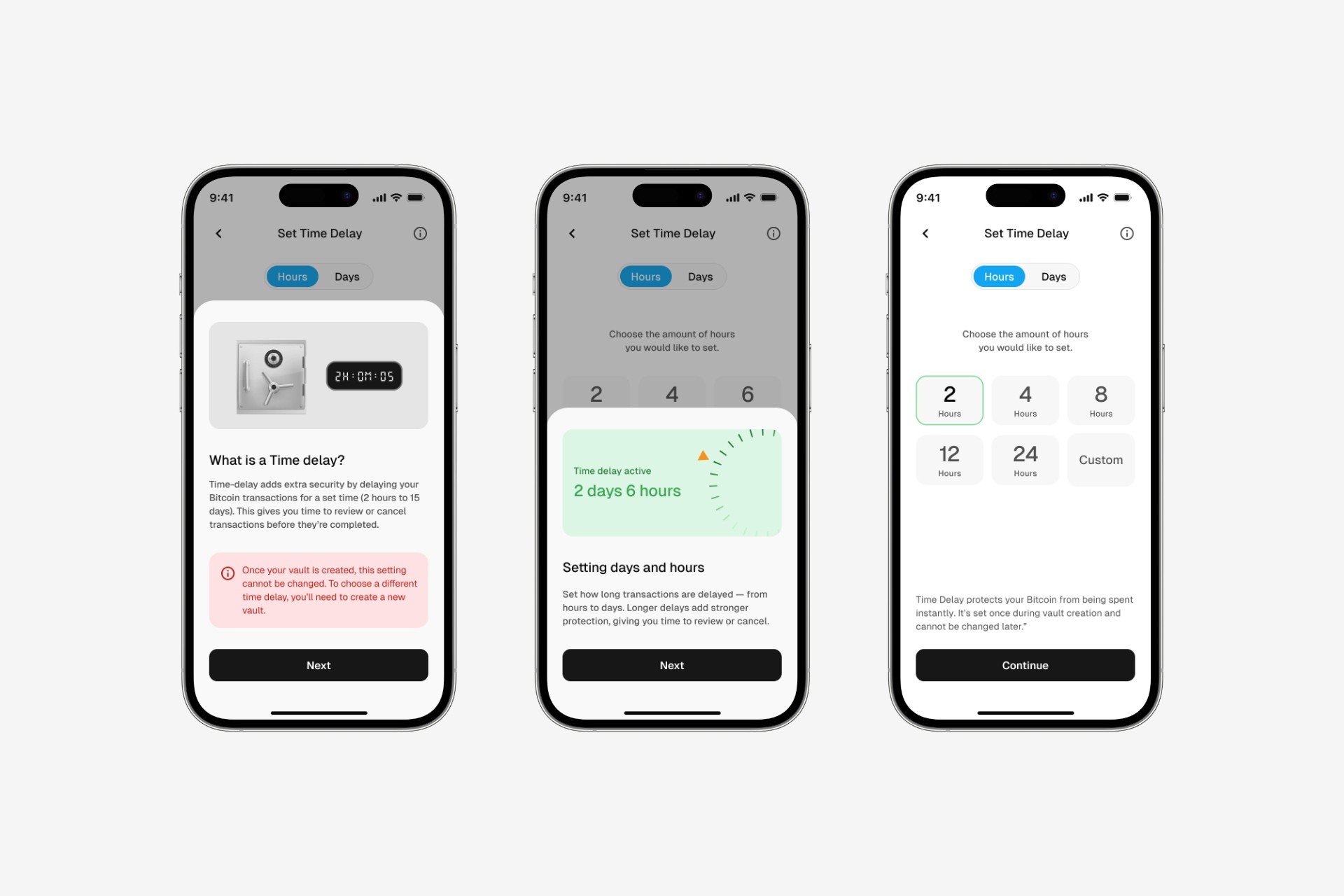
What is Time Delay?
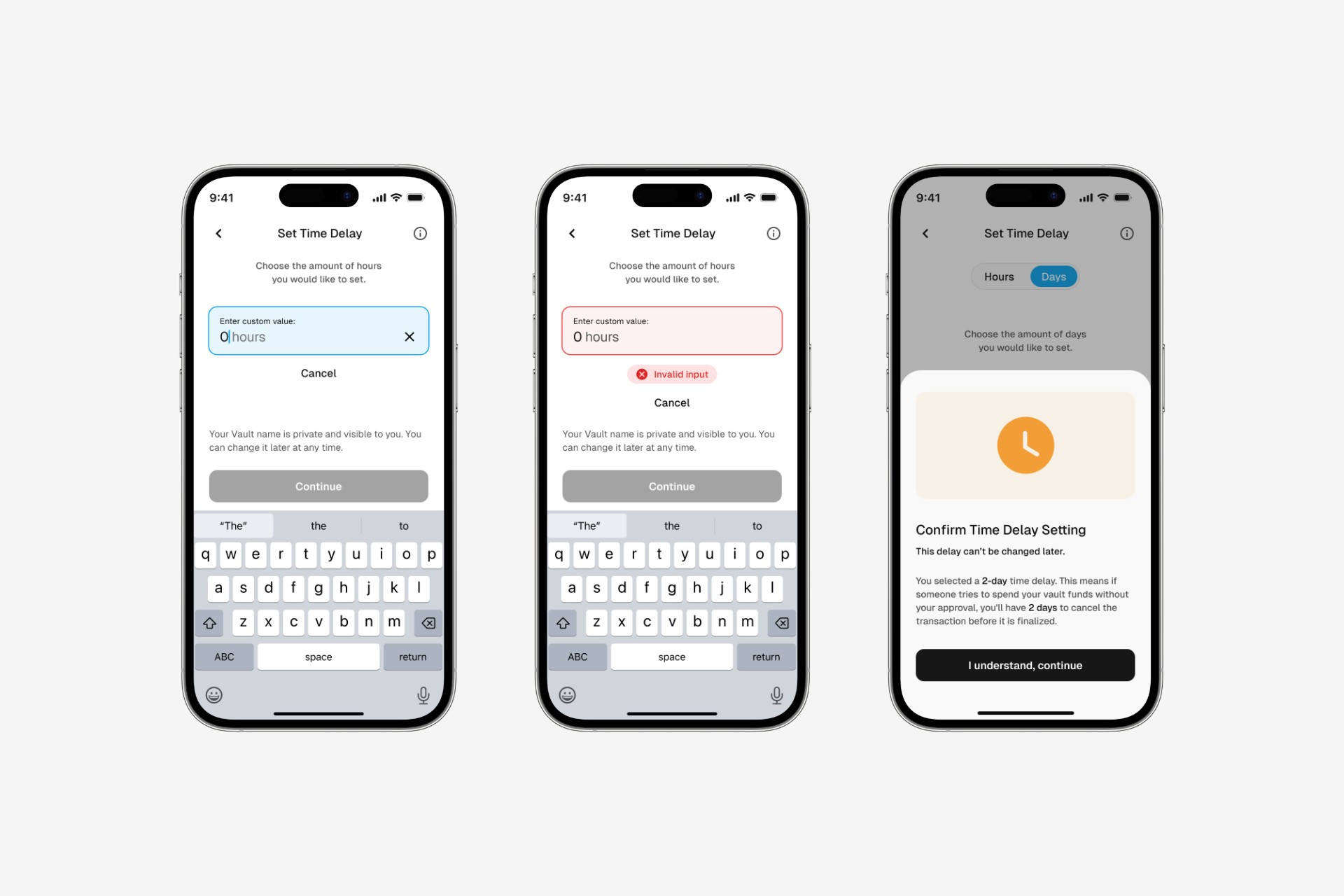
Time-delay adds extra security by delaying your Bitcoin transactions for a set time (2 hours to 15 days). This gives you time to review or cancel transactions before they’re completed.
Problem: If someone forces a user to approve a transaction, funds leave immediately.
Design decisions: Allow users to delay outgoing transactions for a chosen period of time.
Why it matters: Time becomes another security mechanism.
It creates an opportunity to recover access before funds permanently leave the wallet.
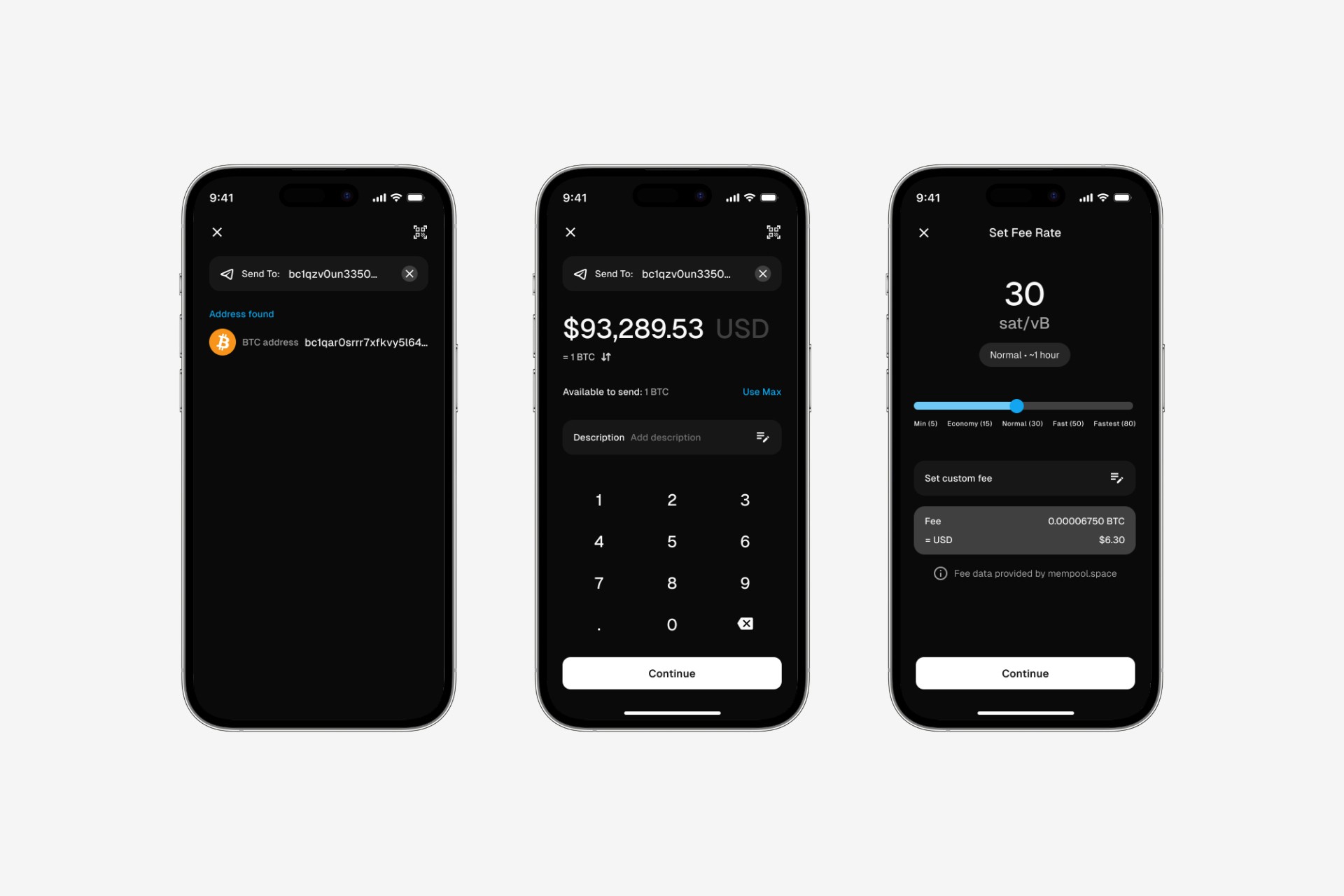

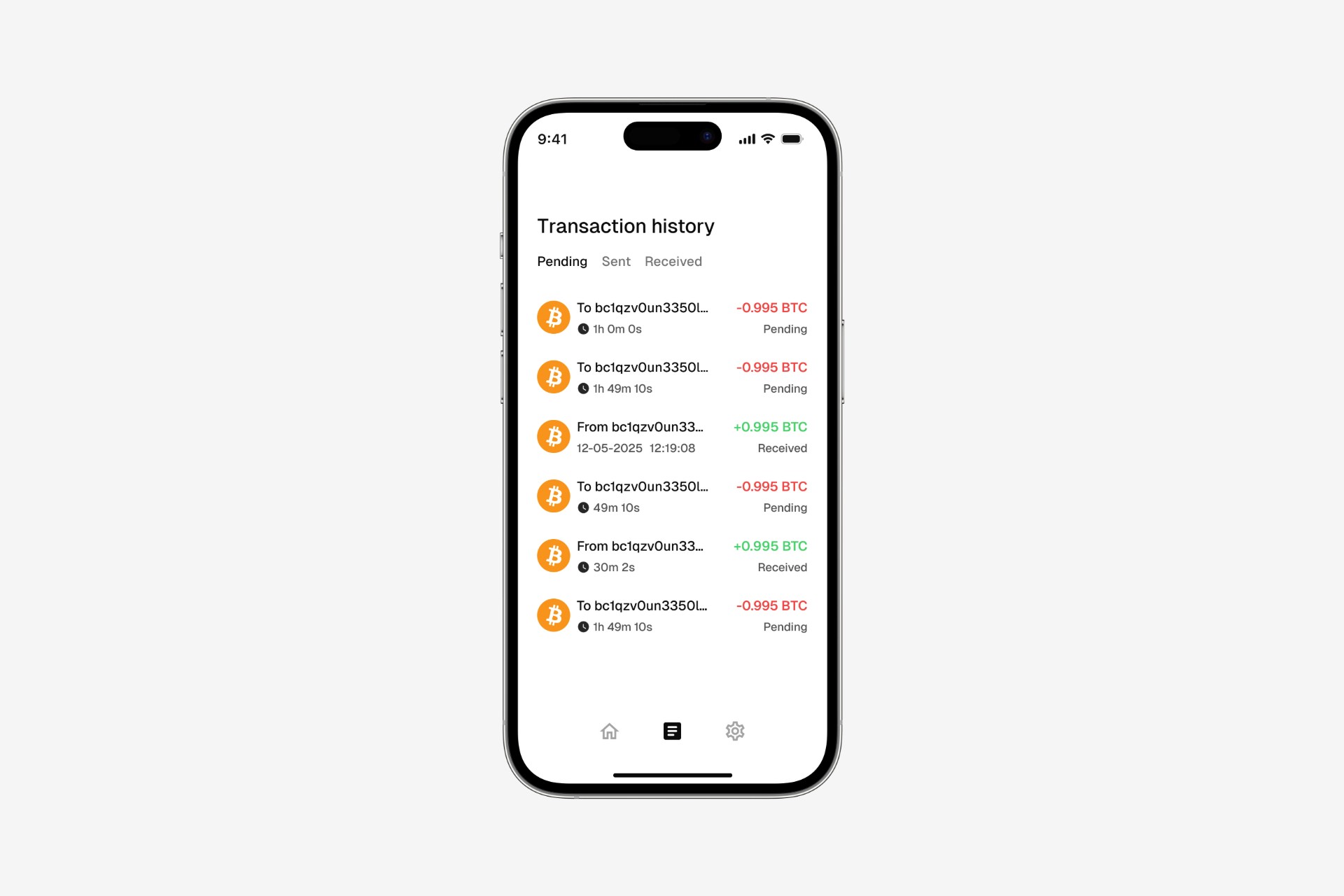
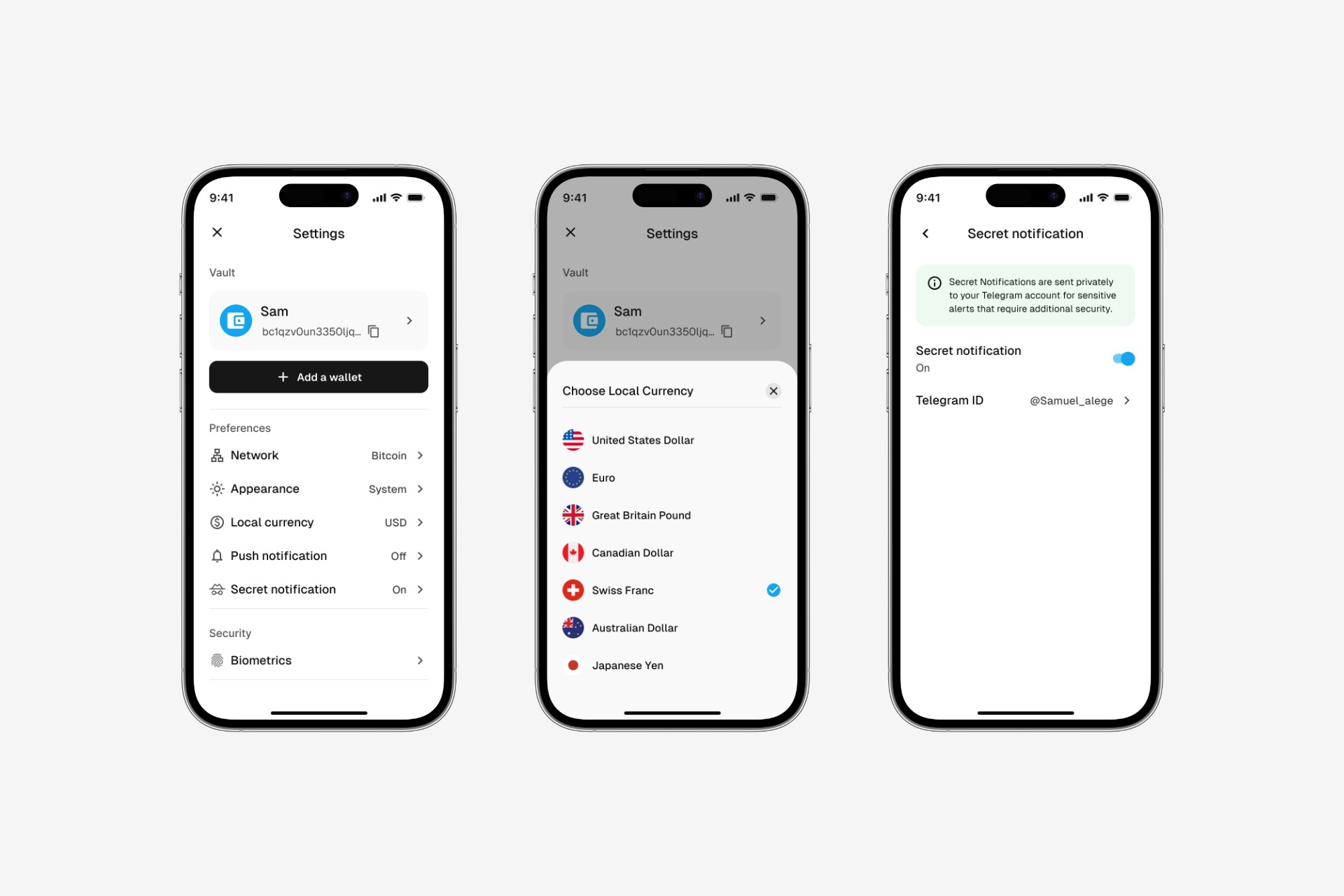
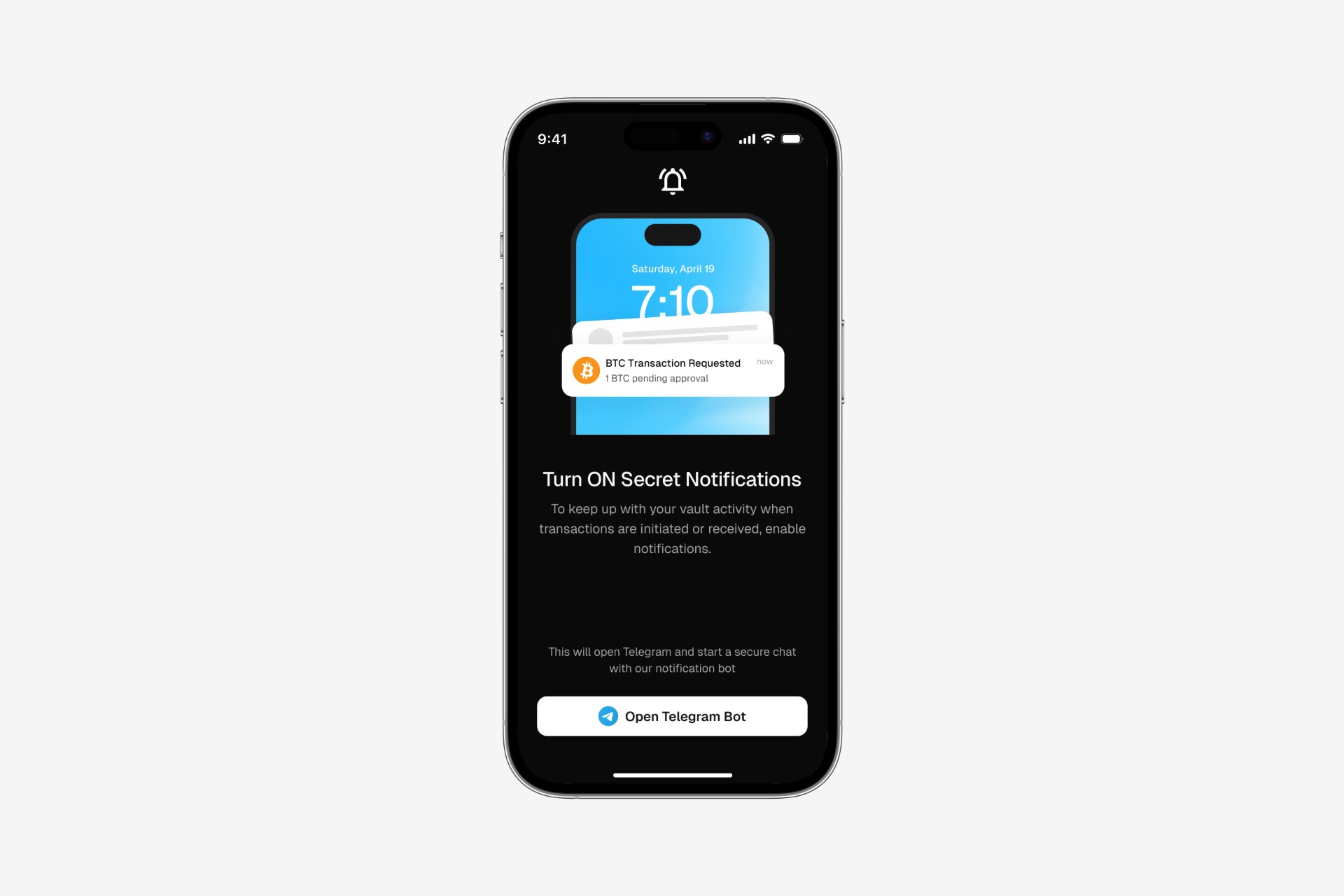
Traditional push notifications become ineffective if someone has access to your phone. To give users an independent way to monitor wallet activity, I designed a secure notification system that connects Bitvault to a private Telegram bot.
Important wallet events are delivered outside the wallet itself, giving users another opportunity to react if their account is ever compromised.
The onboarding flow was intentionally kept simple, guiding users through connecting Telegram with clear feedback at every step. Rather than exposing technical setup details, the experience focuses on building confidence that notifications are active and working.
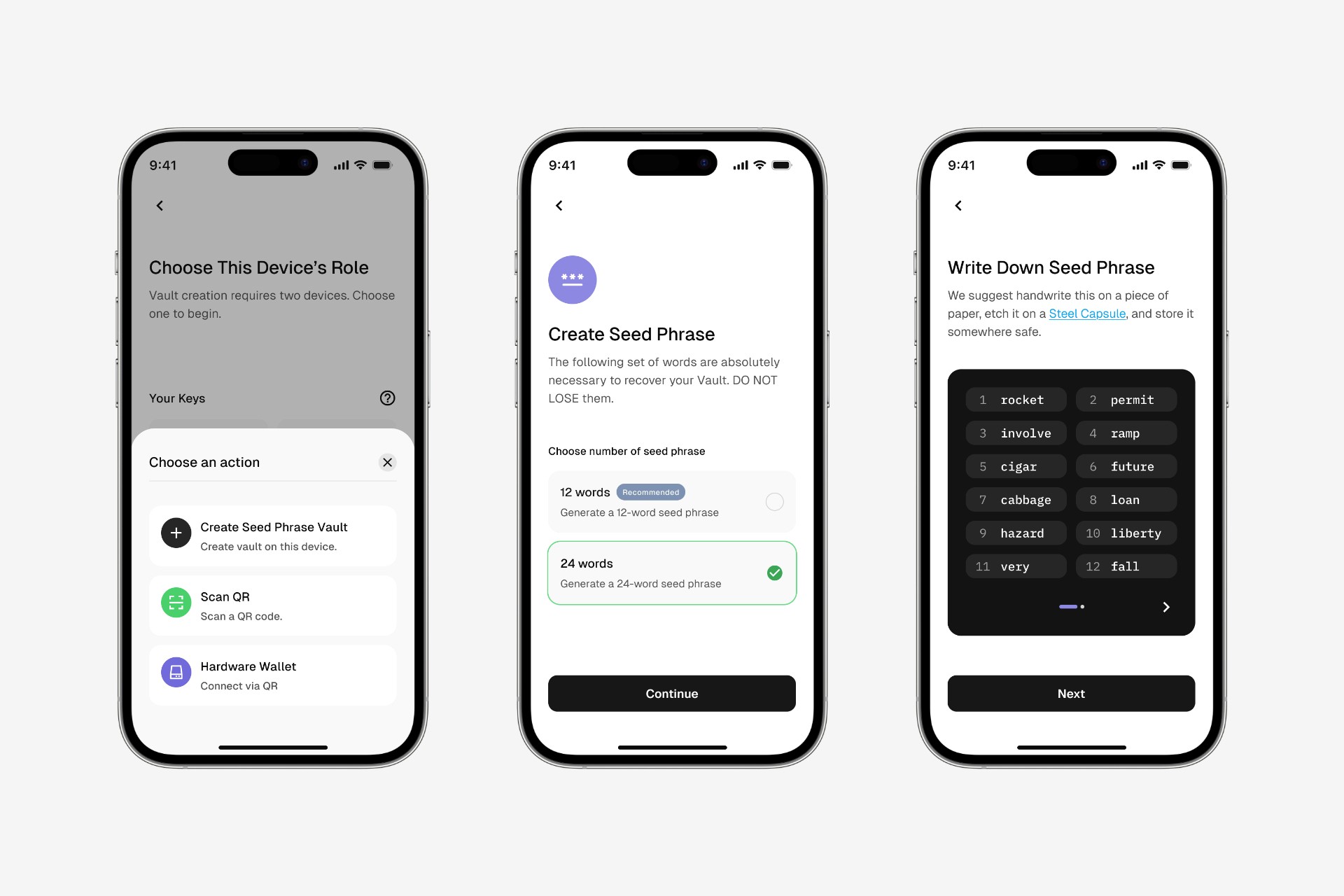
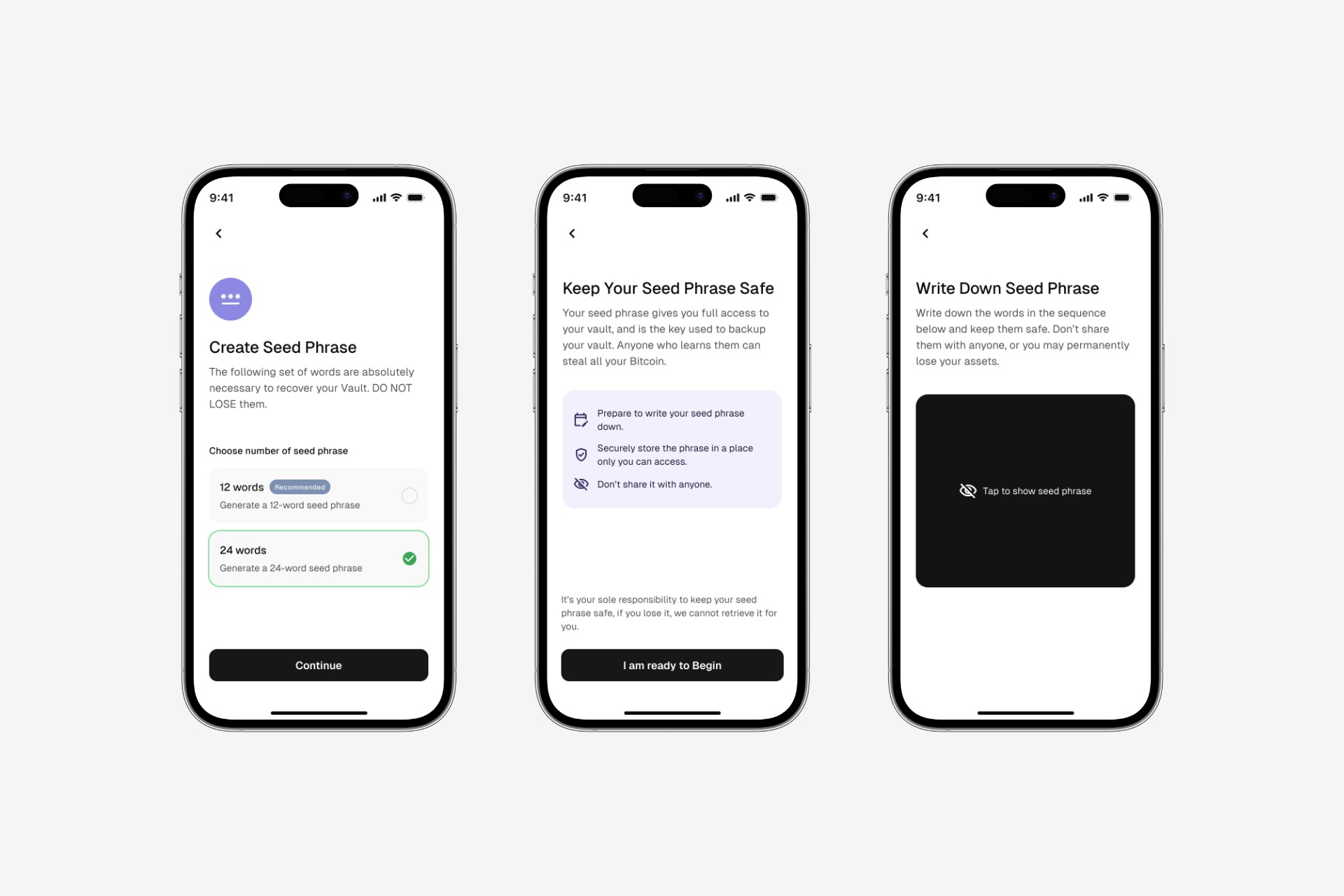
A recovery phrase is the single most important backup a Bitcoin holder has, and one of the easiest things to mishandle. Rather than exposing users to a wall of instructions, I designed the experience to unfold progressively. Users first learn why the recovery phrase matters, choose between a 12- or 24-word backup based on their security needs, and reveal it only when they're ready to record it safely.
Each screen introduces one decision at a time, reducing cognitive load while reinforcing the importance of every step. The goal wasn't simply to complete wallet setup. It was to help users build confidence before they were responsible for protecting their own assets.
This project fundamentally changed how I think about product design.
Before Bitvault, I thought security was primarily a technical problem.
Working on this product showed me that many security problems are actually experience problems. Encryption can protect private keys. Design can protect people.
The most valuable lesson wasn't learning more about Bitcoin.
It was learning how product decisions influence behaviour under pressure.
That's something I'll carry into every product I design, regardless of industry.
✅ Successfully launched on the Apple App Store
✅ Security-first Bitcoin wallet shipped to real users
✅ Introduced protection against physical coercion
✅ Designed complete end-to-end mobile experience
Back to the top